
Signal-chain reconstruction
Trace every command, I/O state, PLC transition, mechanism, sensor and feedback signal to expose the break and unhandled exception.
Parking, industrial automation and IoT
When barriers, parking platforms, conveyors or IoT devices fail intermittently, a restart may only hide the cause. GNS Technology Limited reconstructs the complete signal path using control timing, PLC memory, I/O, network, sensor and application evidence.
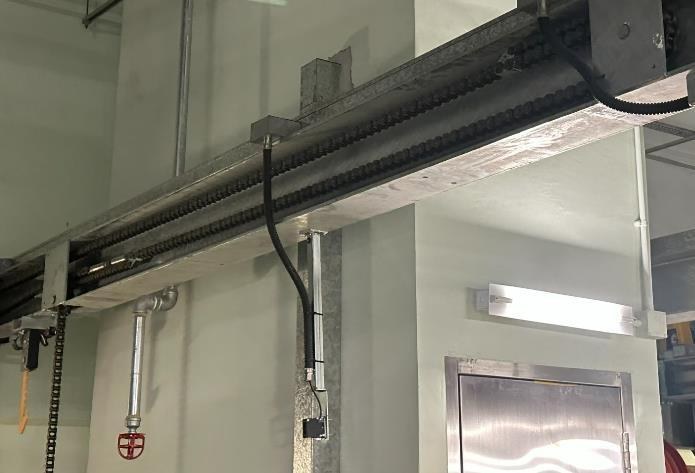
Diagnostic scope
Intermittent faults cross several layers: field triggers, enclosure wiring, I/O, PLC logic, industrial networking, CAS or SCADA applications and operator actions. Replacing one device often leaves the root cause intact.
Trace every command, I/O state, PLC transition, mechanism, sensor and feedback signal to expose the break and unhandled exception.
Under controlled, low-impact conditions, record memory, control pins, alarms, state changes and timing to reproduce rare events.
Review switches, connection counts, address use, segmentation, packet loss and multiple applications competing for the same device.
Check alignment, vibration, reflection, range, false triggering and moving-platform inertia to separate hardware faults from software tolerance.
Check whether the CAS, SCADA, IPC or IoT platform confirms the action, not just that a command left the application.
Turn key states, alarms, disconnections and recovery events into long-term monitoring, trends and incident evidence.
PLC-controlled equipment follows a state machine. A control pulse may be too short for the PLC to accept; a pulse that lasts too long, or a reset that is not cleared in time, may retrigger the sequence. If the application confirms only that the I/O layer received a command, but never confirms that the barrier, platform or conveyor completed its motion, the operator screen can remain stuck in an “operating” state.
GNS does not begin with “the PLC is broken” or “the software has a bug”. We separate the problem into five layers:
| Layer | Question to answer | Typical evidence |
|---|---|---|
| Field equipment | Is the sensor triggering correctly, and has alignment, vibration or environment changed? | Site test, calibration tool, trigger records |
| Control and I/O | Do pin state and timing remain correct when the command reaches the PLC? | PLC memory, control-pin timeline, alarm log |
| PLC logic | Does it handle retriggering, timeout, missing feedback and failed reset? | State transitions, sequence and exception tests |
| Industrial network | Are applications competing, or are links dropping? | Connection logs, switch state, packet and flow analysis |
| Application and operations | Does CAS or SCADA show the real device state? How is recovery performed? | Screens, event logs and workflows |
These systems affect traffic, fire safety, protection circuits and live operations, so trial-and-error changes are unacceptable. GNS establishes a baseline, records normal and abnormal control timing, then uses controlled tests to verify minimum pulse width, maximum recovery time, disconnection behaviour, power recovery and retriggers. Hardware, network or program changes follow the evidence.
An IoT project may focus on the cloud dashboard while the fault exists in device availability, gateway buffering, SIM/APN, time synchronisation, MQTT retry, duplicate data or command acknowledgement. GNS examines edge, network, broker, backend and application together so alarms agree with the physical equipment.
Real consulting case
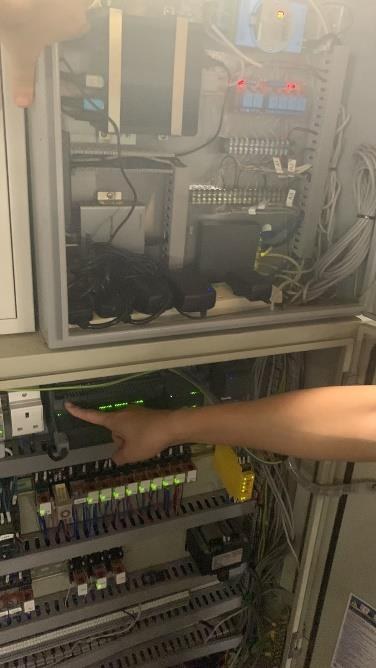
The car park experienced no response after card taps, repeated barrier movement and mid-operation stops. GNS used live Siemens S7 PLC data to record control pins and operating states, tracing unstable reset timing, intermittent I/O connections and multiple applications competing for the control hardware.
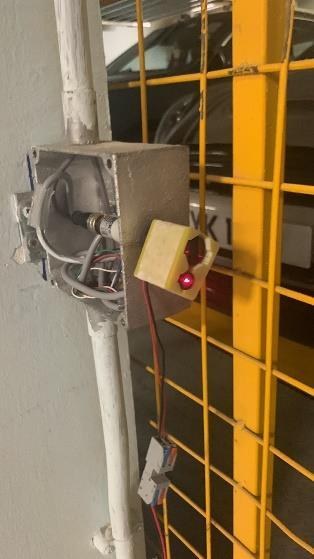
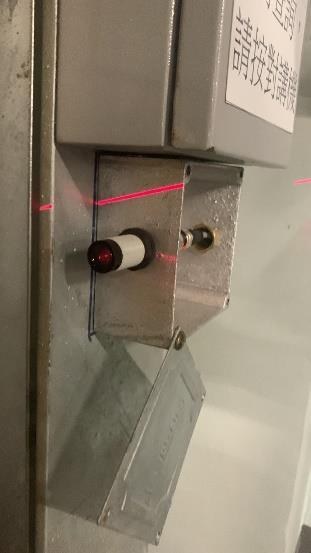
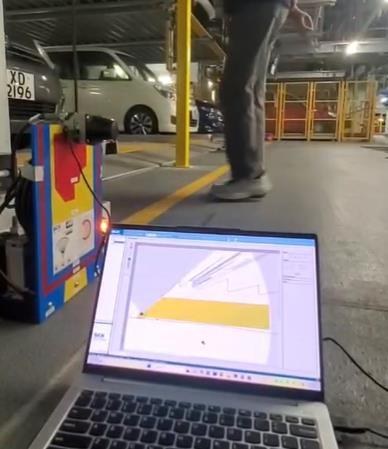
Separately, several infrared emitter and receiver pairs were misaligned over longer distances, while an overhead sensor mounted on a moving platform was affected by the platform's vibration. Those false triggers entered the PLC protection logic and stopped the equipment mid-cycle.
GNS proposed a controlled PLC interface, industrial switch, connection exception handling, revised sensor mounts, calibration method and long-range sensing alternatives. A selected group of bays is used as the pilot before wider phased rollout.
Project representative confirmation
GNS helped us correlate the signal timing across CAS, PLC, I/O and sensors, making an intermittent fault that was difficult to reproduce much easier to verify. The intermittent issue that had affected us for six months was fully resolved within two weeks.
What GNS delivers
Collect fault times, operator records, site video, PLC or SCADA state, network topology, equipment models and recent changes.
Use approved temporary logging for key memory, control-pin, alarm and communication states without disrupting operations.
Reproduce timing, disconnection, vibration, sensor deviation and retriggering, separating root causes from contributing factors.
Develop PLC, I/O, CAS or IoT-gateway interfaces with acknowledgement, timeout, retry, rollback and operator alarms where required.
Correct sensor alignment, mounts, vibration, industrial switching, segmentation and power, avoiding a software-only fix when the physical cause remains.
Hand over test evidence, root-cause report, network and configuration records, recovery procedures, alarm rules and maintenance advice.
Field diagnostics
Safety, operations and change control come first
Any change to PLC memory, control pins, reset behaviour, I/O or protection circuits must follow site safety procedures, vendor requirements and operational approval. GNS starts with low-impact monitoring, then uses controlled tests, version backups, rollback and acceptance checks. We do not bypass protection logic or make unapproved production changes to shorten an investigation.
FAQ
The service covers parking, building services, industrial automation, conveyors and lifts, railway-adjacent controls, environmental monitoring, energy management and other PLC, SCADA, I/O or IoT systems.
Siemens S7 is part of our field experience. We can assess other PLC, DCS, SCADA, I/O module, gateway and IoT platforms according to the available protocol, program and site conditions. The supported scope is confirmed before work begins.
GNS starts with low-impact monitoring and avoids direct control-setting changes. Where controlled testing or program modification is needed, it follows operational windows, safety approval, version backup and rollback procedures.
Yes. We reconstruct the signal chain from field equipment, PLC memory, I/O, communications and operator behaviour. Where access is restricted, we assess alternative sensors, gateways, loggers or controlled interfaces.
Yes. GNS can deliver an independent diagnostic, test record and improvement plan. We can also implement interfaces, industrial networking, sensor calibration, installation, integration, acceptance and support.
Exception handling, communication isolation, control timing, sensor mounting, vibration, maintenance and monitoring must be addressed together. Replacing a failed device or restarting the system normally restores service only temporarily.
For faults at car-park entries, barriers, bay sensors, payment or CCTV, combine this service with the Hong Kong smart parking system solution. For industrial VLANs, switching, segmentation and remote access, see Network Infrastructure Design & Implementation. Sensors, gateways, industrial routers and continuous monitoring can be delivered through AI & IoT Solutions and Teltonika Networks.
Further reading: Hong Kong government office car-park PLC fault investigation.
Last updated: 11 November 2026. Reviewed by the GNS engineering team.
Send the architecture, PLC or SCADA model, fault times, operating records and field-equipment details so GNS can define the diagnostic, test and remediation scope.