How to Choose a Systems Integrator (SI) in Hong Kong (2026 Guide)
 Anson Ng 4 min read
Hong Kong businesses and government teams often discover that their project is bigger than buying hardware: a new office network, a factory IoT rollout, an AI monitoring system or a legacy system modernisation needs someone who can design, supply, install, integrate and maintain it. That person is a systems integrator (SI). This guide explains what an SI actually does, how to tell a capable one from a reseller, and the questions to ask before you commit.
What a systems integrator actually does
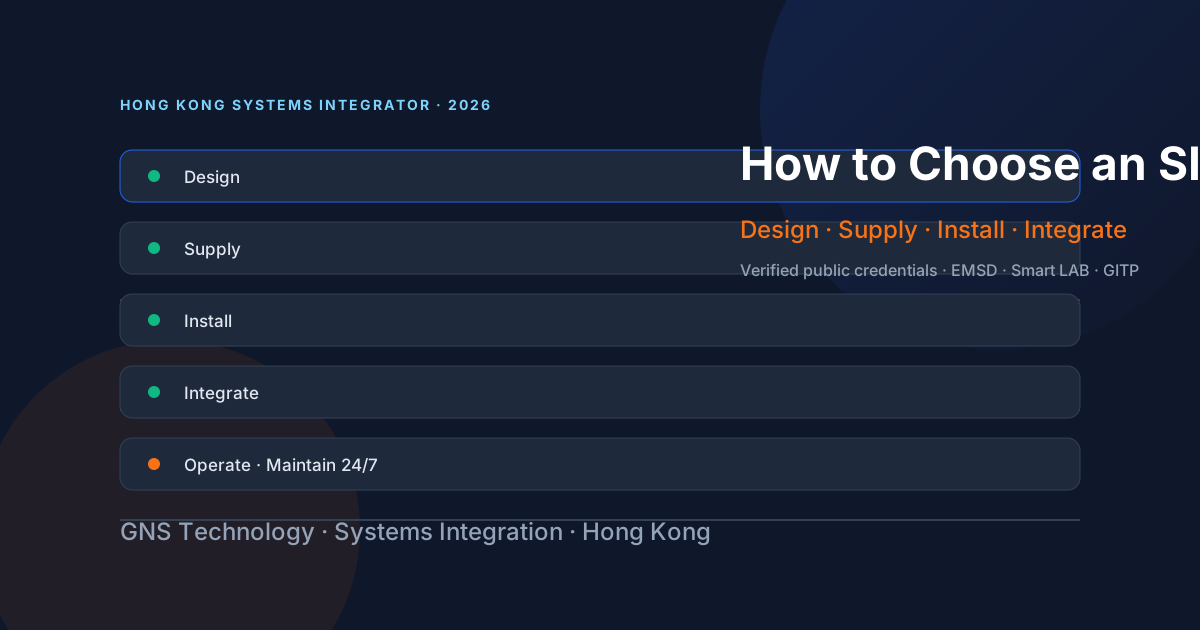
An SI turns separate products into one working system. A typical engagement covers five stages:
- Design — mapping traffic, data flows, physical layout and security zones before anything is purchased.
- Supply — sourcing hardware and software that fit the requirement rather than a single brand's catalogue.
- Installation — cabling, racking, configuration, commissioning and on-site testing.
- Development and integration — connecting new systems to your existing ERP, sensors, cameras or legacy platforms through APIs and middleware.
- Operation and maintenance — monitoring, patching, backups and 24/7 support with clear service levels.
The value sits in stages 1, 4 and 5. Anyone can sell a switch; the reason to hire an SI is that the switch, the software and the people who run them are designed and managed as one system.
Types of providers in Hong Kong
- Carriers and telecom operators — strong on connectivity and subscription services, but engagements usually run on their own platforms and networks.
- Resellers and distributors — broad product catalogues and competitive pricing, but limited design, development and operational depth.
- Software houses — excellent at custom development, but hardware, installation and on-site support are typically subcontracted.
- Engineering-led systems integrators (like GNS) — in-house teams that design, supply, install, develop and support; the best fit when a project mixes hardware, software, networks and operations.
None is universally best. Match the provider type to your project: a standard equipment refresh can go to a reseller; a mission-critical, multi-technology programme needs an engineering-led SI.
Seven questions to ask before hiring an SI
1. Can it show verifiable projects in your industry? Past work in government, railway, manufacturing or logistics tells you more than any demo. Ask for public registrations you can check yourself — for example, solutions listed on the EMSD I&T platform, the Smart LAB platform or the GITP supplier scheme.
2. Does it have its own engineering team? Ask who designs, installs and maintains the system. If every stage is subcontracted, accountability fragments exactly when you need it most.
3. Can it integrate legacy systems? Most projects are not greenfield. Ask whether the SI can connect new equipment to your existing ERP, databases, sensors or industrial platforms through APIs and middleware — or whether it will ask you to rip everything out.
4. Does it handle hardware and software as one delivery? An AI camera system, a factory IoT rollout or an office network only works when sensors, connectivity, software and monitoring are engineered together. Check that one team owns the full stack.
5. What happens after go-live? Systems need monitoring, patching, firmware updates and retraining. Ask for the SLA — response and fix times by severity — and whether support is local and 24/7.
6. Is the pricing phased and transparent? Good SIs separate design, supply, development and maintenance into phases with milestone payments. Beware of open-ended retainers and surprise annual licence bills.
7. Who owns the documentation and IP? Confirm that you receive network diagrams, credentials, runbooks and source code, and that intellectual property transfers to you on full payment unless otherwise agreed.
Red flags
- No named or publicly verifiable references.
- The demo is perfect but the team has never run production.
- Integration is described as "we will coordinate with your other vendors".
- The quote has no breakdown and no maintenance phase.
- Documentation and source code are not mentioned in the contract.
Where GNS fits
GNS Technology Limited (友成科技有限公司) is a Hong Kong systems integrator founded in 2019, with over 16 years of software and project execution experience. We design, supply, install, develop and support AI, IoT, network and ERP solutions for government departments, public bodies, railway operators and enterprises — see our solutions overview, AI & IoT solutions, IoT hardware & solutions and network infrastructure pages.
Our credentials are publicly verifiable:
- Railway AI forecasting registered on the EMSD I&T solution platform — case study.
- Privacy-preserving 3D monitoring registered on the Smart LAB platform — case study.
- Registered GITP supplier under the Digital Policy Office, accepting P-Card purchasing — government page.
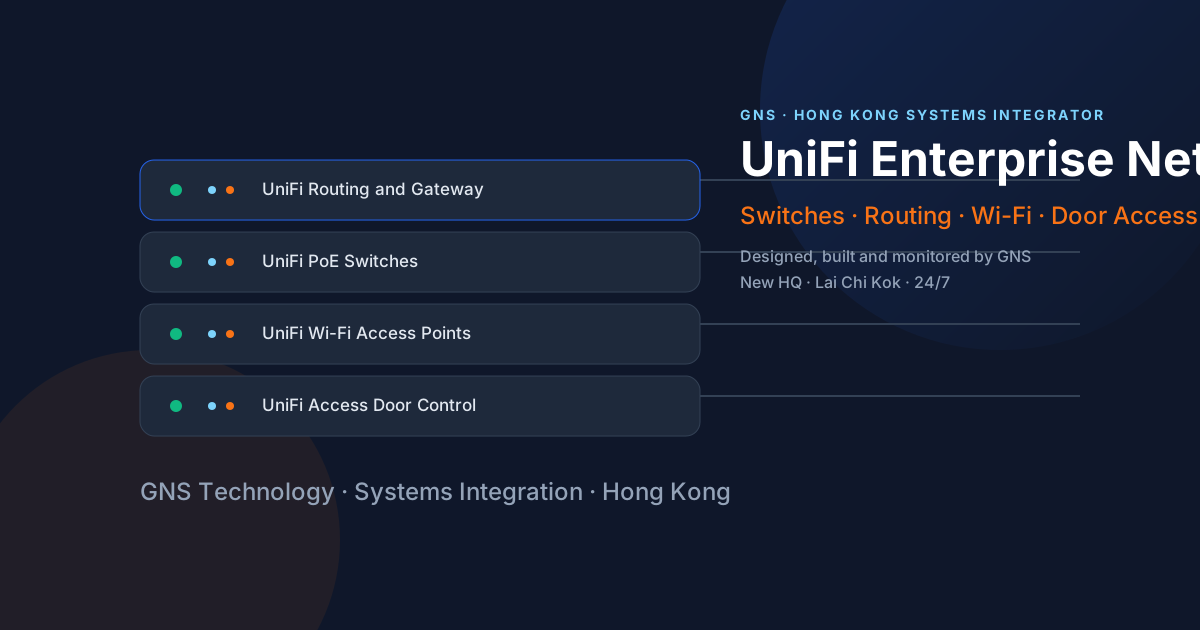
- Our own headquarters network built end to end on UniFi switches, routing, Wi-Fi and door access — case study.
- MTR workshop maintenance management system — paperless operations and a 50% reduction in management work hours over three years — case study.
If you are comparing providers, our guide to choosing an AI solution provider explains a similar shortlist process for AI projects. If you have a project in mind, talk to our engineers and we will show you the design before the quote.
FAQ
What is the difference between a reseller and a systems integrator?
A reseller sells products and passes support back to the manufacturer. A systems integrator designs the solution, supplies or sources hardware, installs it, builds the software and integration layer, and operates it with local 24/7 support — one accountable partner from design to operations.
How can I verify a Hong Kong SI's track record?
Ask for projects registered on public platforms, such as the EMSD I&T solution platform, the Smart LAB platform or the GITP supplier scheme, and check them yourself. Public registrations are more verifiable than anonymous case studies or unnamed client quotes.
How much does a system integration project cost in Hong Kong?
It depends on scope. A typical network, IoT or integration project is delivered in phases — design, supply, installation and development — with milestone-based payment. Annual maintenance after handover commonly runs 10–20% of the build cost. Ask for a phased quote before committing.
Can government departments procure from a Hong Kong SI?
Yes. Departments can engage an SI through GITP (a registered supplier notification list), P-Card purchasing, or standard quotation and purchase order flows. GNS is a registered GITP supplier and accepts P-Card purchasing.
What questions should I ask before hiring an SI?
Ask who owns the design and engineering, whether installation and maintenance are done in-house, how legacy systems will be integrated, what the SLA and escalation times are, whether documentation and source code transfer to you, and for verifiable public references in your industry.